
HEMKUND SAHIB TOUR PACKAGE

Hemkund Sahib
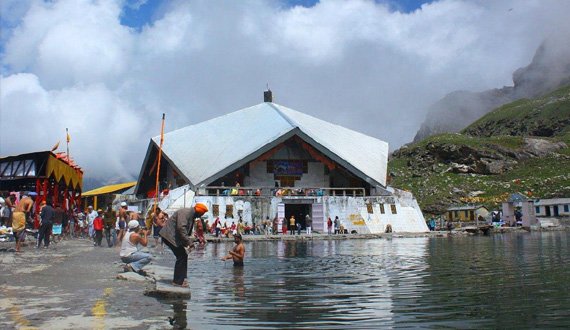
Hemkund Sahib is a sacred Sikh shrine located on the shores of Hemkund Lake at an elevation of 4,320 meters. It is believed to be the place where Guru Govind Singh, the tenth and last Sikh Guru, united with God after prolonged meditation in his previous birth. This site was rediscovered by two devout Sikhs, Sant Sohan Singh and Havildar Mohan Singh, guided by the Guru's autobiography, which described the location.
In Hindu mythology, Hemkund, also known as Lokpal, is the place where Lakshman, the brother of Lord Rama, performed his penance. The journey to Hemkund Sahib begins with a 15 km trek from Govindghat, the gateway to the Bhyundar or Lakshman Ganga Valley. Govindghat is on the bus route to Badrinath. The trek offers stunning views of pine and rhododendron forests, wild roses, ferns, and alpine flowers. The Lakshman Ganga river can also be seen along the way. The final 5 km of the trek involves a steep climb from Ghangharia, which serves as a base for visitors to Hemkund.
Hemkund Lake is approximately 2 km in circumference. Its clear, still waters reflect the Saptashringa Peaks, which rise to 5,500 meters around the lake. Between July and October, the best season to visit Hemkund, bits of ice can be seen floating on the lake's surface. The rocky shores of the lake are adorned with moss and blooming flowers, creating a serene and picturesque environment.
Sightseeing & Excursion
Gurudwara Hemkund Sahib
This imposing star-shaped structure of stone and concrete masonry is on the shores of the lake. An outlet behind the Gurudwara is the source of the Lakshman Ganga.
Temple of Lord Lakshman
A small temple nearby, dedicated to Lord Lakshman.
Ghangharia/Govinddham
5 Kms. Situated in the midst of a pine grove, Ghangharia serves as a base for visiting Hemkund Sahib. It is the last human habitation in the valley. A tourist lodge, log huts, tents, and a Gurudwara provide comfortable accommodation.
Govind Ghat
15 kms. The confluence of the Alaknanda and Bhyundar or Lakshman Ganga. It has an imposing Gurudwara named after Guru Govind Singh.
Valley Of Flowers
(3 kms From Ghangaria): It is nearly 5 Kms. in length and 2 Kms. in width. This valley has been declared a National Park to regulate camping, cooking, grazing etc., which spells a danger to the local environment. The best season to visit this valley is during the monsoons in July & August when the countless flowers in bloom present a breathtakingly spectacular sight. This is a unique world of flowers – innocent, delicate and beautiful, that appear to smile back at you. In this valley of flowers, one is compelled to marvel at nature’s divine beauty. The valley is also home to a large variety of wildlife.
Kagbhusandi Tal
(5230 mts.): This is a small oblong lake with emerald green waters. It is at an altitude of 5230 mts., near Kankul Pass (5230 mts.), and is almost a kilometer in length. Myriad blossoms decorate its banks during the season, a wildest profusion of colors make the trekker forget the hardships and the exhaustion of the trek.
Set in the lap of Hathi Parvat (6730 mts.), the lake can be approached either from Bhyundar village, near Ghangaria, or from Vishnu Prayag. The trek from the former is a little easier in gradient, but is longer. The trek from Bhyundar passes through thick bear-infested forests and stretches of stinging nettles. The only shelters here are the shepherd huts. This trek also involves walking long distances across glacier moraines and over slippery rocks. Local guides are available at Bhyundar village.
Two huge rocks on a spur of Hathi Parvat are described as a crow (Kaga) and an Eagle (Garuda). The locals believe that the crow is animatedly conversing with Garuda on the affairs of the universe. Another version has it that a learned Brahmin of Ayodhya once incurred the wrath of the sage Lomas who lived here and was changed into the form of a crow by the sage. The approach to the lake from Vishnu-Prayag is along ridges and involves steep climbing. Shepherd’s huts are the only shelter in the area.
Badrinath
(22 kms from Govindghat): Badrinath, one of the 'Four Dhams', is one of the most celebrated pilgrimage spots of the country and is situated at an elevation of 3,133 mts., guarded on either side by the two mountain ranges known as Nar & Narayan with the towering Neelkanth Peak providing a splendid backdrop. This revered spot was once carpeted with wild berries. Thus the place got the name “Badri van”, meaning “forest of berries”.
Legend dates the temple prior to the Vedic age, though the present temple is believed to have been established by Adi Guru Shankaracharya. The temple has been renovated several times due to earlier damages by avalanches and looks modern now with a colorful “Singh Dwara” or the main entrance gate. The temple has three parts – Garbha Griha (The Sanctum Sanctorum), Darshan Mandap (for pujas), and Sabha Mandap (for devotees to assemble). The temple opens every year in the month of April-May and closes for winters in the third week of November. Dedicated to Lord Vishnu, the temple of Shri Badrinathji is 5 mts. in height, built in the form of a cone with a small cupola of a gilt bull and spire.
SIGHT SEEING & EXCURSION :
Gurudwara Hemkund Sahib
This imposing star-shaped structure of stone and concrete masonry is on the shores of the lake. An outlet behind the Gurudwara is the source of the Lakshman Ganga.
Temple of Lord Lakshman
A small temple nearby, dedicated to Lord Lakshman.
Ghangharia/Govinddham
5 Kms. Situated in the midst of a pine grove, Ghangharia serves as a base for visiting Hemkund Sahib. It is the last human habitation in the valley. A tourist lodge, log huts, tents, and a Gurudwara provide comfortable accommodation.
Govind Ghat
15 kms. The confluence of the Alaknanda and Bhyundar or Lakshman Ganga. It has an imposing Gurudwara named after Guru Govind Singh.
Valley Of Flowers
(3 kms From Ghangaria): It is nearly 5 Kms. in length and 2 Kms. in width. This valley has been declared a National Park to regulate camping, cooking, grazing, etc., which pose a danger to the local environment. The best season to visit this valley is during the monsoons in July & August when countless flowers in bloom present a breathtakingly spectacular sight. This unique world of flowers – innocent, delicate, and beautiful – appears to smile back at you. The valley is also home to a large variety of wildlife.
Kagbhusandi Tal
(5230 mts.): This is a small oblong lake with emerald green waters. It is at an altitude of 5230 mts., near Kankul Pass (5230 mts.), and is almost a kilometer in length. Myriad blossoms decorate its banks during the season, a wildest profusion of colors that make the trekker forget the hardships and exhaustion of the trek.
Set in the lap of Hathi Parvat (6730 mts.), the lake can be approached either from Bhyundar village, near Ghangaria, or from Vishnu Prayag. The trek from the former is a little easier in gradient, but is longer. The trek from Bhyundar passes through thick bear-infested forests and stretches of stinging nettles. The only shelters here are the shepherd huts. This trek also involves walking long distances across glacier moraines and over slippery rocks. Local guides are available at Bhyundar village.
Two huge rocks on a spur of Hathi Parvat are described as a crow (Kaga) and an eagle (Garuda). The locals believe that the crow is animatedly conversing with Garuda on the affairs of the universe. Another version has it that a learned Brahmin of Ayodhya once incurred the wrath of the sage Lomas who lived here and was changed into the form of a crow by the sage. The approach to the lake from Vishnu Prayag is along ridges and involves steep climbing. Shepherd’s huts are the only shelter in the area.
Badrinath
(22 kms from Govindghat): Badrinath, one of the 'Four Dhams', is one of the most celebrated pilgrimage spots of the country and is situated at an elevation of 3,133 mts., guarded on either side by the two mountain ranges known as Nar & Narayan with the towering Neelkanth Peak providing a splendid backdrop. This revered spot was once carpeted with wild berries. Thus, the place got the name “Badri van”, meaning “forest of berries”.
Legend dates the temple prior to the Vedic age, though the present temple is believed to have been established by Adi Guru Shankaracharya. The temple has been renovated several times due to earlier damages by avalanches and looks modern now with a colorful “Singh Dwara” or the main entrance gate. The temple has three parts – Garbha Griha (The Sanctum Sanctorum), Darshan Mandap (for pujas), and Sabha Mandap (for devotees to assemble). The temple opens every year in the month of April-May and closes for winters in the third week of November. Dedicated to Lord Vishnu, the temple of Shri Badrinathji is 5 mts. in height, built in the form of a cone with a small cupola of a gilt bull and spire.
Call to Book Now Whatsapp Now Enquiry Now